



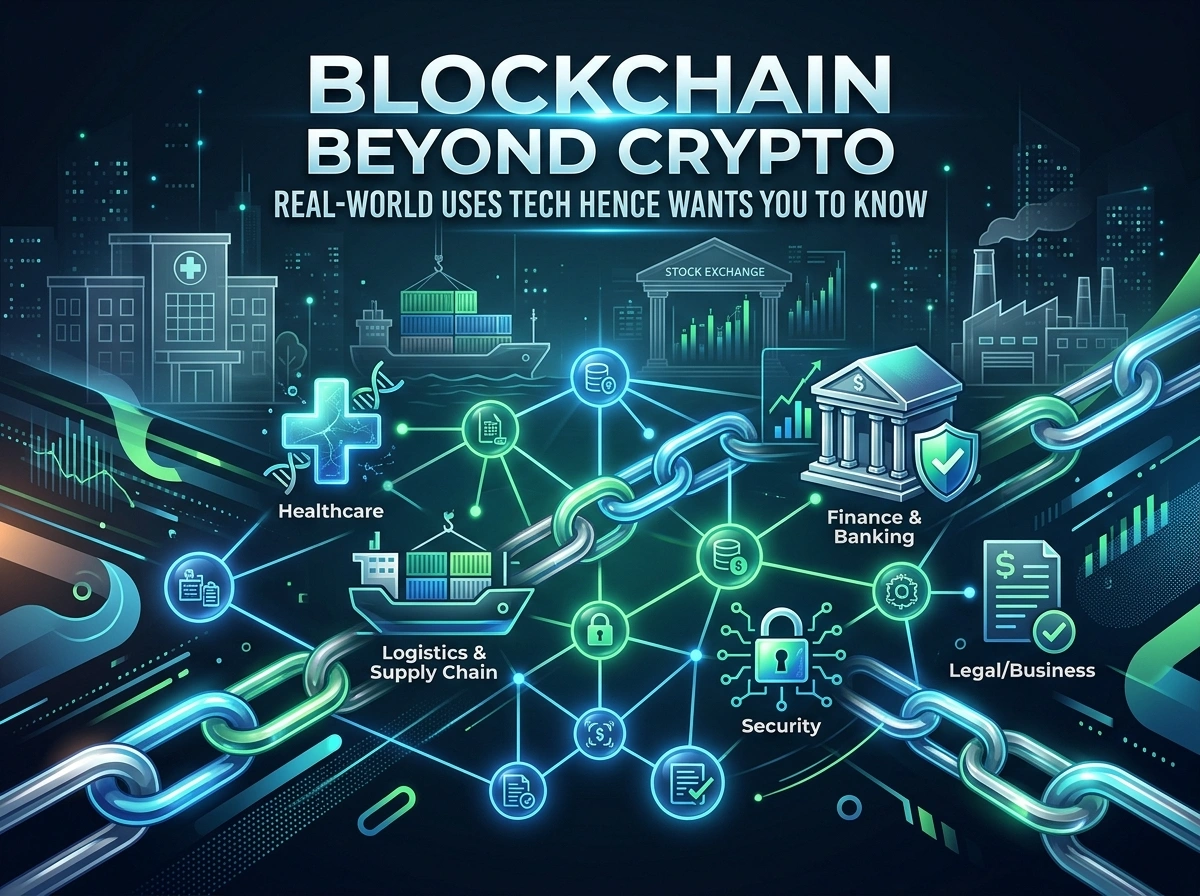
Say the word “blockchain” and most people picture Bitcoin, wild price swings, and speculative trading. But the technology behind cryptocurrency has quietly grown into something far bigger. Blockchain now solves real problems in industries you interact with every day—from the food on your plate to the way you prove who you are online.
At its core, blockchain is a shared digital ledger that records information in a way no single party can secretly alter. That simple idea—trusted, tamper-resistant records—has powerful uses well beyond digital coins. In this article, you’ll learn six practical applications changing how businesses and governments operate: supply chain management, healthcare, voting systems, smart contracts, real estate, and digital identity verification.
If you’ve dismissed blockchain as pure crypto hype, here’s your reason to look again.
Why Blockchain Matters Outside of Cryptocurrency
Traditional databases rely on a central authority—a bank, a company, a government office—to keep records honest. That works until the authority makes a mistake, gets hacked, or acts in bad faith.
Blockchain flips this model. Instead of one gatekeeper, records are distributed across many computers. Each entry links to the one before it, creating a chain that’s nearly impossible to fake. Once information is added, everyone can see it, and no one can quietly change it.
This creates three qualities businesses love:
- Transparency: All authorized parties see the same records.
- Security: Altering past data would require rewriting the entire chain.
- Trust without middlemen: Parties who don’t fully trust each other can still cooperate.
These traits make blockchain useful anywhere accurate records and shared trust matter. As industry analysts at tech hence often point out, the biggest gains come from unglamorous problems—not headline-grabbing coins.
1) Supply Chain Management: Tracking Goods From Source to Shelf
Ever wonder where your coffee, seafood, or medicine actually came from? Supply chains are complex, and paperwork gets lost or faked along the way. Blockchain fixes this by recording every step of a product’s journey on one shared ledger.
Here’s how it works. When a farmer ships produce, that event is logged. When it reaches a warehouse, then a distributor, then a store, each handoff adds a permanent record. Anyone in the chain can verify exactly where an item has been.
Retail giants already use this approach. Walmart, for example, worked with IBM to trace leafy greens back to their farm in seconds instead of days—critical during a food-safety recall.
Takeaway: If you run a business that moves physical goods, blockchain can cut fraud, speed up recalls, and prove authenticity to customers.
2) Healthcare: Securing and Sharing Medical Records
Your medical history is scattered across clinics, hospitals, and specialists. Getting those records to talk to each other is slow, and every transfer risks a privacy breach.
Blockchain offers a safer way to store and share health data. Patient records can live on a secure ledger where only authorized doctors gain access—with the patient controlling permissions. Every time someone views or updates a file, that action is logged permanently.
This solves two big problems at once. Patients get one reliable record that follows them anywhere, and hospitals reduce the risk of tampering or unauthorized access. Blockchain also helps track pharmaceuticals, making it harder for counterfeit drugs to slip into the supply.
Takeaway: For healthcare providers, blockchain means fewer data errors, stronger privacy, and smoother coordination between care teams.
3) Voting Systems: Building Trust in Elections
Few things demand trust more than an election. Voters need to know their ballot was counted and not altered. Blockchain-based voting could make that possible.
With a blockchain system, each vote becomes a secure, encrypted record. Voters can confirm their ballot was recorded correctly, while the system keeps individual choices private. Because no single party controls the ledger, tampering with results becomes extremely difficult.
Several pilot programs have tested this idea. Some countries and municipalities have trialed blockchain voting for smaller elections, and the technology shows promise for boosting both security and turnout—especially for remote or overseas voters.
Takeaway: While large-scale adoption still faces hurdles, blockchain voting points toward more transparent, verifiable elections.
4) Smart Contracts: Agreements That Enforce Themselves
A smart contract is code that automatically executes when conditions are met—no lawyers, no waiting, no manual follow-up.
Picture renting an apartment. A smart contract could release your security deposit the moment your lease ends and an inspection passes. Or in insurance, a policy could pay out automatically when a verified flight is delayed. The rules live on the blockchain, so both parties trust the outcome.
This removes friction from countless transactions. Businesses save money on intermediaries, and everyone benefits from faster, dispute-free execution. Industries from finance to logistics are already building products on this foundation.
Takeaway: If your business relies on repetitive agreements, smart contracts can automate them while cutting costs and delays.
5) Real Estate: Simplifying Property Transactions
Buying property involves mountains of paperwork, title searches, and middlemen—each adding time and expense. Blockchain streamlines the entire process.
Property titles can be stored on a blockchain, creating a clear, permanent ownership history. This makes title searches faster and dramatically reduces fraud. Combined with smart contracts, a sale can transfer ownership and funds automatically once conditions are met.
Blockchain also enables “tokenization,” where a property is divided into digital shares. This lets multiple investors own a fraction of a building, opening real estate investment to people who couldn’t afford an entire property.
Takeaway: For buyers, sellers, and investors, blockchain promises faster closings, lower fees, and safer ownership records.
6) Digital Identity Verification: Owning Your Own Data
How many times have you handed over personal details to prove who you are? Every one of those handoffs is a chance for data to leak or be stolen.
Blockchain enables self-sovereign identity, where you control your own credentials. Instead of dozens of companies storing copies of your data, you hold a secure digital identity and share only what’s needed. A bar could confirm you’re over 21 without ever seeing your full birthdate or address.
This approach reduces identity theft, speeds up verification, and gives people real control over their personal information. Governments and financial institutions are exploring it to simplify onboarding while protecting privacy.
Takeaway: Digital identity on blockchain means less exposure, fewer passwords, and more control for you.
Conclusion: The Quiet Revolution Behind the Hype
Blockchain is far more than the engine behind cryptocurrency. It’s a tool for building trust—and trust underpins almost everything we do. From tracing your groceries to protecting your medical records, securing elections, automating contracts, simplifying property deals, and guarding your identity, blockchain is already reshaping real industries.
The common thread is simple: wherever people need honest, shared, tamper-proof records, this technology delivers. And unlike speculative trading, these applications create lasting, practical value.
Your next step is easy. Pick one area relevant to your work or life—supply chains, healthcare, contracts, or identity—and watch how blockchain adoption grows there over the next few years. The businesses that understand these uses early will hold a clear advantage as the technology matures. Blockchain’s biggest story was never about coins. It’s about rebuilding trust for the digital age—and that story is just getting started.
