



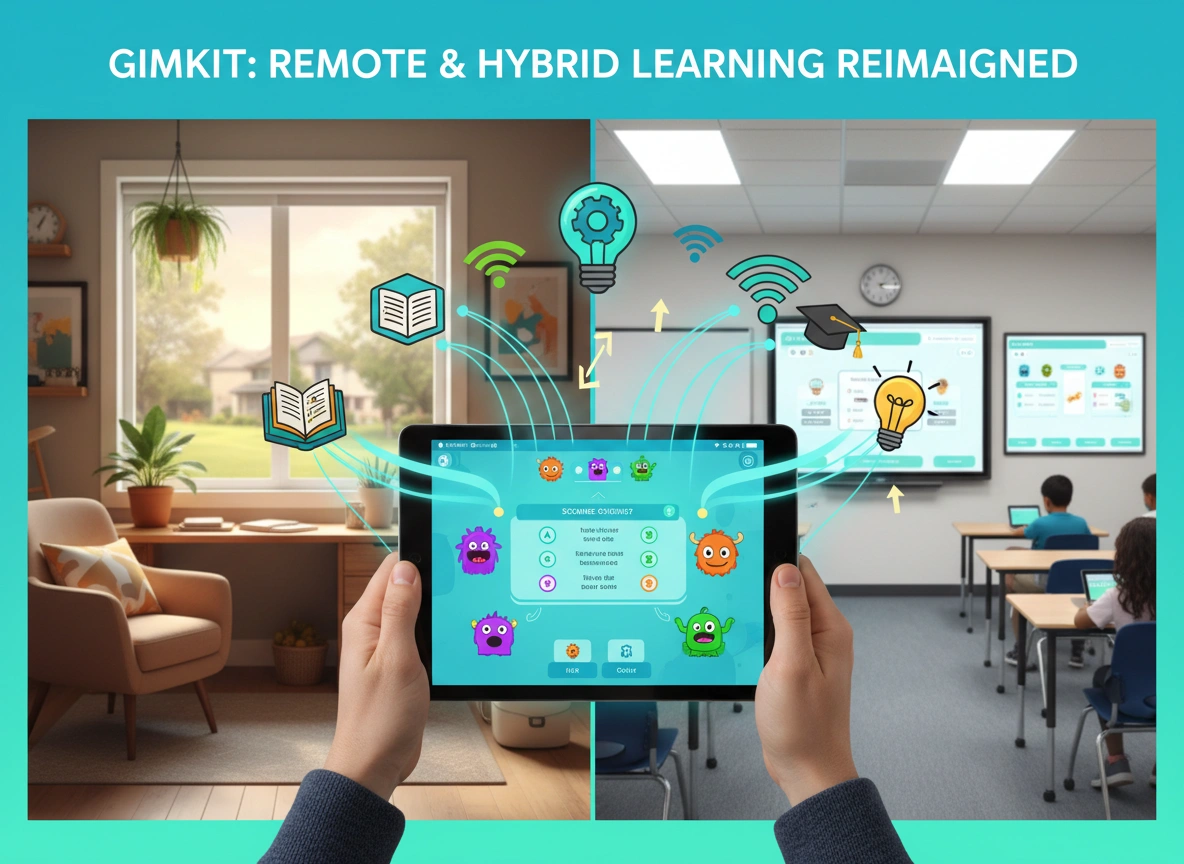
The landscape of education has shifted dramatically over the last decade, with remote and hybrid learning moving from niche alternatives to mainstream educational models. While these formats offer flexibility and accessibility, they also present significant challenges. Educators often struggle to maintain student engagement, foster a sense of community, and deliver personalized feedback when physical distance separates the classroom. In this new era, gamification has emerged as a powerful tool to bridge the gap, and Gimkit stands out as a premier platform for revitalizing the learning experience.
Gimkit, a live quiz learning game often compared to Kahoot! or Quizizz, was created by students for students, giving it a unique edge in understanding what truly motivates learners. Unlike traditional quiz platforms, Gimkit incorporates elements of strategy, currency, and power-ups that turn assessments into dynamic game shows. This article explores how Gimkit enhances engagement, supports diverse learning styles, and fosters collaboration, specifically within the challenging contexts of remote and hybrid educational settings.
Revitalizing Engagement in the Virtual Classroom
One of the most persistent hurdles in remote learning is the “black box” phenomenon—screens turned off, microphones muted, and a palpable lack of energy during synchronous sessions. Traditional lectures often fail to hold attention in a virtual environment where distractions are just a browser tab away. Gimkit addresses this head-on by transforming passive review into active competition.
The Mechanics of Motivation
At its core, Gimkit is built on a high-octane feedback loop. Students answer questions at their own pace on their own devices. Correct answers earn them “virtual cash,” which they can then reinvest during the game to purchase upgrades and power-ups. This economic layer adds a strategic depth that goes beyond simple recall. A student doesn’t just need to know the answer; they need to decide whether to invest in a “Streak Bonus” to maximize future earnings or buy “Insurance” to protect against mistakes.
In a remote setting, this mechanic is transformative. It demands constant attention and decision-making. A student cannot passively click through answers; they are managing a virtual portfolio. This level of cognitive involvement keeps students glued to the activity, reducing the likelihood of them drifting off to other digital distractions.
Live Games vs. The “Zoom Fatigue”
Live Gimkit games create a shared, electrifying moment during a video call. The leaderboard fluctuates wildly, not just based on who answers fastest, but on who plays the smartest strategy. Features like the “Thanos Snap” (which balances the game by halving the earnings of the leader) or “Snowball” (which freezes a player’s screen for a few seconds) create interaction between students who might be miles apart.
This interactivity breaks the monotony of “Zoom fatigue.” Suddenly, the chat box lights up with reactions to game events. The teacher becomes a game show host rather than just a lecturer. For hybrid classes, where half the students are in the room and half are at home, this levels the playing field. Everyone interacts with the same interface, playing by the same rules, creating a unified class experience despite physical separation.
Supporting Diverse Learning Styles and Pacing
A critical flaw in many synchronized classroom activities is that they privilege the fastest processors. Students who need a moment to think often get left behind in speed-based games. Remote learning can exacerbate this anxiety, as students may feel isolated in their confusion. Gimkit’s design philosophy offers a more inclusive approach that supports various learning needs.
Repetition without Boredom
Unlike traditional quizzes where a question appears once and vanishes, Gimkit cycles through the question set repeatedly until the game ends (usually based on a time limit or a collective financial goal). This repetition is vital for mastery. If a student gets a question wrong, they view the correct answer and know they will see that question again soon. This lowers the stakes of failure. Getting a question wrong isn’t a penalty; it’s a learning opportunity to get it right the next time for more money.
For students with learning differences or those who struggle with retention, this mechanism creates a safe environment for trial and error. They can take their time, learn the material through exposure, and still contribute to the class goal.
Asynchronous Assignments for Flexibility
Hybrid and remote learning rely heavily on asynchronous work—tasks students complete on their own time. However, sending home a PDF worksheet or a standard Google Form rarely inspires excitement. Gimkit offers an “Assignments” feature that allows teachers to set a deadline and a monetary goal.
Students can log in whenever they have internet access and play until they reach the target amount. Because the game mechanics (earning money, buying upgrades) remain intact, the homework feels less like a chore and more like a challenge. This is particularly beneficial for students in remote settings with unreliable internet or shared devices, as they can engage with the material when it suits their schedule without losing the engaging elements of the platform.
Customization for Differentiated Instruction
Teachers can tailor Gimkit sets (“Kits”) to specific learning objectives. Furthermore, the platform offers different game modes that cater to different vibes. “Classic” mode is great for individual competition, while modes like “Trust No One” (a social deduction game similar to Among Us) cater to students who thrive on social interaction and psychology rather than just rote memorization. By varying the modes, teachers can rotate through different pedagogical approaches, ensuring that competitive students, collaborative students, and analytical students all have their moment to shine.
Fostering Collaboration and Community
Building a classroom culture is perhaps the hardest task for remote and hybrid teachers. How do you create a sense of “us” when “we” are never in the same room? Gimkit creates opportunities for teamwork that require genuine communication and collective effort.
Team Mode and Shared Goals
In Gimkit’s Team Mode, students are pooled into groups where their individual earnings contribute to a total team pot. This shifts the dynamic from “I need to win” to “We need to win.” In a hybrid setting, a teacher might pair remote students with in-person students, forcing them to communicate via chat or breakout rooms to coordinate strategy. For example, one student might focus on earning money while another focuses on buying upgrades that benefit the whole team.
This necessitates dialogue. Students must discuss: “Should we save up for the multiplier?” or “Who is handling the defense?” This type of peer-to-peer interaction is gold dust in remote learning, fostering connections that might otherwise never happen.
Collaborative Game Modes
Gimkit has introduced innovative modes like “The Floor is Lava” or “Draw That,” which require cooperative play. In “The Floor is Lava,” the class must work together to keep the blocks above the lava by answering questions correctly. If they fail, everyone loses. This “us against the game” dynamic is incredibly powerful for community building.
When a remote class collectively wins a difficult challenge, there is a shared sense of triumph. It provides a touchstone event—a shared memory—that the class can look back on. These moments humanize the digital classroom, transforming avatars and names on a screen into teammates and allies.
Real-Time Feedback and Data-Driven Instruction
Finally, the benefits of Gimkit extend to the logistical and pedagogical side of teaching. In remote learning, gauging student understanding is difficult. You cannot walk around the room to check looking over shoulders. Gimkit provides actionable data that makes the invisible visible.
Instant Formative Assessment
As the game progresses, teachers receive real-time data on student performance. They can see which questions are being missed most frequently and which students are struggling to earn money (a proxy for answering correctly). This allows for immediate intervention. A teacher might pause the game to address a common misconception that 60% of the class is getting wrong, turning a gaming moment into a teaching moment.
detailed Post-Game Reports
After the session, Gimkit generates a detailed report breaking down accuracy by student and by question. In a hybrid model, this data is invaluable for planning the next steps. If the data shows that the remote cohort struggled with a specific concept compared to the in-person cohort, the teacher knows exactly where to target their review efforts. This ensures that no student falls through the cracks simply because they weren’t physically present to ask for help.
Conclusion
The shift to remote and hybrid learning has forced educators to reimagine their toolkits. Tools that merely digitize analog worksheets are no longer sufficient to capture the attention of digital-native students. Gimkit succeeds because it does not just test knowledge; it gamifies the process of acquiring it.
By leveraging the psychology of video games—risk, reward, immediate feedback, and social interaction—Gimkit transforms dry review sessions into high-energy events. It provides a scaffold for students who need repetition, offers flexibility for asynchronous learners, and builds bridges between isolated students through collaborative play. For educators navigating the complexities of the modern classroom, Gimkit is more than just a game; it is a vital instrument for engagement, inclusion, and community building. In the challenging landscape of remote and hybrid education, it brings the fun back into learning, one virtual dollar at a time.
Please visit this website for more info.
